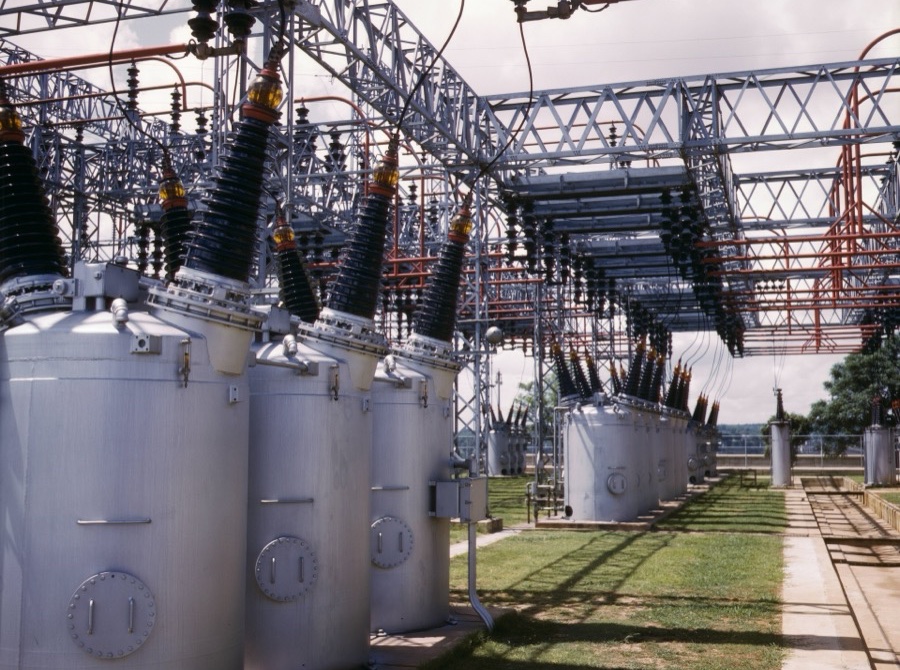
The power station doesn't need a software refresh
WE HAVE BUILT ECONOMIES AROUND EQUIPMENT THAT LASTS DECADES AND CONNECTED IT USING TECHNOLOGY THAT AGES IN YEARS.

A protective relay in an electrical substation might have been installed in 2012 with an expected service life of 25 years. It could still be doing its job perfectly well in 2037. Its cryptography, operating system and network security may have become obsolete a decade earlier.
This is a fairly ordinary problem across critical national infrastructure. We have built economies around equipment that lasts decades and connected it using technology that ages in years.
Something has to give.
The economics of keeping things running
Much of the cybersecurity industry operates on the assumption that infrastructure is replaceable. When a product reaches the end of support, buy another one.
Try explaining that to someone responsible for a national electricity grid.
Across energy, water, telecommunications and transport, replacing a component can involve months of engineering, safety assessments and carefully scheduled outages. Sometimes the original manufacturer no longer exists. Sometimes the replacement requires changes to other equipment that works perfectly well.
There is considerable value left in these assets. We think there is an engineering opportunity in preserving it.
Security on a different clock
The transition to post-quantum cryptography is about to make this problem considerably more visible.
Much of the equipment operating in critical infrastructure today will still be in service when quantum computers threaten the public-key cryptography we currently depend on. Some of that equipment will never be capable of running modern cryptographic algorithms.
Meanwhile, operators still need to collect telemetry, maintain equipment remotely and exchange information between facilities. Every new connection needs to be secured.
What if we could change the security of those connections independently of the equipment itself?
This is part of the thinking behind Crux.
By introducing a lightweight, post-quantum-safe networking layer, we can bring modern cryptography, continuous authentication and granular access controls to existing infrastructure. Where equipment cannot run Crux natively, a gateway can establish a security boundary close to the asset.
An engineer accessing a remote pumping station can be granted access to the specific resources needed for the job. Traffic between substations can be encrypted independently of the underlying communications infrastructure. Access can be revoked without having to reconfigure the industrial equipment itself.
The operator retains control of the network and, importantly, can change how it is secured as cryptographic requirements evolve.
Building around what already works
There will always be equipment that needs replacing. An encrypted connection won't fix vulnerable firmware or a compromised industrial controller.
But there is a great deal we can do about how that equipment is exposed, how it communicates and who has access to it while it remains in service.
The security architecture can evolve as individual assets are replaced, allowing operators to modernise at a pace that makes sense for their operations.
At Sirius, we're interested in how much more we can get out of the infrastructure the world has already built. Much of it was engineered to last a generation.
We think its security should be able to keep up.

